The Gig Catch that never was

Go to Blogger edit html and find these sentences.Now replace these sentences with your own descriptions.

This is default featured slide 2 title

Go to Blogger edit html and find these sentences.Now replace these sentences with your own descriptions.

This is default featured slide 3 title

Go to Blogger edit html and find these sentences.Now replace these sentences with your own descriptions.

This is default featured slide 4 title

Go to Blogger edit html and find these sentences.Now replace these sentences with your own descriptions.

This is default featured slide 5 title

Go to Blogger edit html and find these sentences.Now replace these sentences with your own descriptions.

Wednesday, August 15, 2012

Dongri to Dubai: Six Decades of the Mumbai Mafia


Hussain Zaidi is famous crime reporter of Mumbai and author of several books on the Mumbai mafia. A life time spent reporting on the mafiosi compared to bigger than any other mafia in the world, Zaidi has been its chronicler and historian of par excellence bringing detail and depth to his cherished subject.

Though, Zaidi has written three books earlier covering the Mumbai mafiosi, including the famous Black Friday and Mafia Queens of Mumbai, his latest- a chronological history of the Mumabi mafia brings out the best of him, both as a writer and the practioner of his trade. From Dongri to Dubai is as much a history book on Mumbai mafiosi which runs like nerve center of the entire mafia in India ; is as much a book on the rise of noted underworld Don and fugitive Dawood Ibrahim, about whom Zaidi says would be like no other.

Zaidi using his extensive field reporting experience and even digging out some old connections lists the famous dons of the Independent India. Karima Lala, Vardarajan Mudaliar and noted smuggler Haji Mastan's lives have been written about and have been also played out in the bollywood movies. But Zaidi manages to bring more tales and even details to the already said tales of these famous trio, who until early 70”s were the undisputed dons of Mumbai. Until, the three dreaded dons ruled the entire Mumbai, blood was not spilled on the streets of the city. However, that changed when new gangs emerged, especially the pathan gangs and Dawood's, blood flowed like water in the intra gang rivalry. The rise of Dawood also saw a corporate style of functioning of the underworld which until then had worked more on muscle.

Dawood says Zaidi changed that. And largely to his shrewd and cunning brain, he kept both police and politician in good terms which the other gangs failed to do so. Born, a constable's son, Dawood and his siblings very early in life took to crime like a bee to a flower. Their operation base Dongri, soon became the head quarter of "D'' company from where they came to rule the entire city. With Hindu don Chotta Rajan joining him as his manager operations, his strength increased and the Don increased his area of work to Dubai, South Africa and other asian countries.

But the riots in Mumbai changed everything for both Dawood and India. Large scale killing of Muslims in the 1992 riots had brougth resentment and a feeling of venegence for the blood of the innocent spilled. According to Zaidi, Pakistan's ISI contacted Dawood, who by then had shifted his base to Dubai for help in logistics and local network to carry out a serious of bomb blasts and bring the financal nerve of India to a halt. A relctuant Dawood budged later, says Zaidi and the rest in hsitory. One of the worst ever attacks happened in the Indian soil more than 275 innocent lives were lost. Mumbai came to a stand still, and a shocked nation chocked in breath at the large scale destruction.

Since then Dawood has been India's no 1 fugitive and has been residing under constant protection from Pakistan, partly thanks to Chotan Rajan because he surrendered to the India embassy, Dawood had to close his shop in Dubai. Zaidi who interviewed Dawood once recalls that he is a soft spoken and well behvaed Don unlike others who drop explectives before every sentence.

The book also touches Abu Salem and makes a passing mention of Chotha Shakeel. But, the main highlight of the book is to know the way the system uses Dawood to cut through the others and how Dawood uses the same system to establish his hold on both the mafia and the city.


Monday, August 13, 2012

Drought in Karntaka


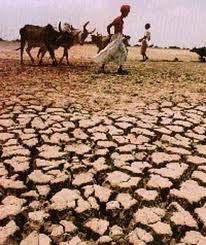
Even as the infighting among various factions continues within Karnataka BJP for the post of ministers and party president, the state is facing one of the worst droughts in the last 40 years. While, the state government claims that all the needed measures are taken in order to mitigate drought, critics however point out, the disaster have been brought about by lack of policy initiatives by both the central and state government.

`` Both the central and state government should have initiated contingency plans a week earlier. Now it would be difficult to rescue various crops in many areas.  Lessons haven’t been learnt from the drought of 2009. They cannot depend completely on rainfall for agriculture’’ says agri scientist Devinder Sharma.

According to the central met department there has been a 23 percent deficit of monsoon rains this year. Kharif crops in Punjab, Haryana, Gujarat, Rajasthan, Maharashtra are under severe threat with Karnataka the most affected had said union agriculture minister Sharad Pawar in July this year.

Devinder says, ideally, Karnataka state should have invested in rain water harvesting years in advance to avert such a crisis, especially after the failure of the north east monsoon in 2011. `` Both the central and state government should evolve an agricultural plan that matches water consumption of crops to the arability of the land so that the crops can withstand lower then expected rainfall. While such plans have been under discussion for years nothing has been done about them.  Every drought effects not only production, but sets back the farming sector by at least three years’’, he says.

The failure of the measures as suggested, and truants by rains have wrecked havoc in Karnataka this year. According to the local meteorological department, the state has received more than sixty percent of short fall of rains this year. Barring the coastal belt, through out the state there has been a deficit of rain fall. According to the data, in some districts the deficit of rainfall is around somewhere between 60 to 90 percent. The state government itself out of the 176 taluks has declared drought in 163 taluks making Karnataka the Rajasthan of the south.

The situation is such grave that due to long spells of no rain many of the reservoirs in the country are going without water. According to the central water commission bulletin (July), important reservoirs are down to 55 percent of last years storage, and seventy six percent of the last ten years. Out of the 84 reservoirs of India monitored by the central water commission, the storage capacity has been reported to be just 36.321 BCM, of the total capacity of 154.421 BCM. Last year, the storage was 66.180 BCM.

In Karnataka too, out of the 14 reservoirs, there has been a deficit of more than 40% of water. The capacity holding of the largest reservoir in the state Almatti has been reduced to 24 tmc out of 123 tmc capacity holding. Last year, it was reported to be 80 tmc. According to officials of the state water board, this 24tmc was always stocked for contingency plans. But this year, first in such case, they had to release the reserved water not leaving even the last drop. Almatti has been a major source of water for farmers of the Northern belt. Districts like Bidar, Gulbarga, Bijapur, Bagalkot, Raichur form the North belt of the state; where in the people of the Lingayat caste is dominant, who form the back bone of the state BJP. In the recent Global Investors Meet, the state government has planned to supply water to 12 mega projects from the same reservoir. If these projects come through, there would be a need of 15 tmc of water from Almatti and the Krishna Basin.

Cities are also witnessing the pinch of the rainfall deficit. Whereas Bengaluru, Mysore, Mandya, receives their water from Krishnaraja Sagar (KRS) dam, the deficit of rainfall this year (Mysore received 35 percent deficit rain, and whereas Mandya received a deficit of 45) has drastically reduced the capacity holding of the KRS dam to mere 1 percent, as compared to last year’s of 67 percent. If the situation persists, there might be an acute shortage of drinking water in the coming days, which in turn can lead into power crisis if the same situation persists.

The cumulative effect of the deficit of rainfall and non- availability of water for irrigation has resulted in heavy loss of crops to the 16 lakh drought hit farmers of the state. ‘’ Out of the 74 lakh hectares planned for Kharif cultivation, only 20 to 24 lakh hectares have been sown. And around 90 percent of the crops that have been sown have been affected by moisture’’ says Raje Gowda, agri meteorological scientist from University of Agricultural Sciences, Bangalore.
While this year, there has been no estimation done yet to ascertain the total loss of crops. An official of the disaster management wing of the revenue department says, last year, the total crop loss was Rs. 6,013 crores (4,245.84 – Kharif crop loss and Rs. 1768 crores Rabi crop loss). He says, on condition of anonymity, this year’s estimation would be known only by September end.  The state government however has been demanding a relief package of 2500 crore from the centre for this year’s crop loss. Secretary of the Revenue department was unavailable for comment.

In the meanwhile, the central government has announced that it will put into motion contingency plans for drought in all the states. The contingency plan announced by central govt will have farmers re-sowing kharif crops (like groundnut, gram, maize and ragi) in expectation that rains would hit the first week of October.  Farmers have also been asked to grow short term crops like jowar, sunflower and potatoes in uncultivated land. ‘’ But both sowing and re-sowing of crops needs seeds to buy, which small farmers would not be able to afford with even 50% government subsidy. The government should make efforts to distribute free seeds to farmers’’ says farmer leader and president of the largest farmer co-operative in the state Kodihalli Chandrashekar. Once we experience a drought, even after a relief of three years of good rain, the farmer will be unable to come out it. All the measures taken by the state BJP is inadequate and would have no impact in the long run. Says Chandrashekhar, `a joke is being played out in the name of relief’.

While the relief is yet to reach the distraught farmers, both the ruling government and the opposition are at logger heads over measures to mitigate drought. While newly inducted CM Jagadish Shettar thinks that Rs. 3500 crore farm loan waiver is enough to mitigate the crisis. Opposition parties however have accused the ruling government of doing an eyewash and publicity gimmick. Replying in assembly, Shettar said that, farmers who took loans up to Rs. 25,000 and defaulted from co-operative institutions between August 2011 and June 2012 are only eligible for this waiver. Condemning the government’s stand, opposition Congress leader Siddaramaih in the assembly said, `` around 90% of farmers have already repaid the loans and the interest. What about farmers who have obtained loans from nationalised banks? What about those who have taken loans more than Rs, 25,000? What about those who have not availed loans but are drought affected? The farmers have incurred a total loss of Rs. 10,000 crore due to drought and if the BJP government was serious about providing relief to drought victims, it should wave off the entire crop loan unconditionally’’.

With rains playing truant, the saffron party has now turned towards gods and recently splurged Rs. 17 crores from the state coffers to 34, 000 temples to pray for rain. The move highly critised by civil society and general public alike was however strongly defended by the government. 

Note: The above piece was written two weeks ago; so some of the data is old.

Sunday, August 5, 2012

Assam Violence- Minority Perspective


The summer of 2012 has been very inauspicious for the state of Assam which is known for its diverse and vibrant culture especially gender equality and religious tolerance. This summer Assam has witnessed massive flood which took away many lives and livestock and left many houses damaged, little known to the outside world. However, the Guwahati molestation case, where a reporter of a regional news channel allegedly instigated a group of men to molest an underage girl and filmed it, shocked one and all. The topic remained hotly debated and pursued on national media, which otherwise ignores the North East, till two ethnic groups in western Assam  - Bodos and Bengali Muslims started burning each others’ houses.

 The Bodos are an ethnic and linguistic community, who were one of the early inhabitants of Assam. They are part of the larger ethnic group called Bodo-kachari and are mainly settled in the north western part of Assam which is presently divided into four districts viz. Kokrajhar, Chirang, Baksa and Odalguri. They continued to live their pristine tribal way of life disconnected from the world which, fortunately or unfortunately, progressed materialistically giving rise to complex societies and way of life.
 In late 19th century and early 20th century, under British India, Muslims from East Bengal started to settle down in Western Assam. The main reason behind this large scale migration was the exploiting zamindars who stripped off the peasants from their land by various tricks. The fertile land of Assam which was mostly unoccupied became the perfect alternative for these peasants. They came, cleared the forests and claimed their land. For the British government, it meant more revenues. By the middle of the last century when India was being torn apart on religious lines, the western part of Assam was so overwhelmingly Muslim populated that the Muslim League asked for many of its districts to be part of East Pakistan. However, Pakistan was created with only one of district of Assam called Sylhet while the rest remained in Assam, so are its Muslims, majority of whom didn’t migrate back to the newly created country for Muslims.
 But Muslims had to pay price for the decision to stay back in Assam. In early 60s, there was a movement in Assam over language. Assamese speakers are less than 50% in the state which meant it couldn’t automatically become the official language of the state. And the reason for this was the presence of Bengali speaking people. But a sacrifice was made – Bengali Muslims of Western Assam would declare their mother tongue as Assamese which would make Assamese as the majority language in the state which became the medium of education for next generations to come. Though they would speak Bengali at home, they would read or write in Assamese creating a dual identity but never to be really considered an Assamese.
Almost a decade later, East Pakistan sought to be a separate country from West Pakistan over language. The Pakistan army indulged in all kind of cruelty which compelled mass exodus to India – West Bengal in the west and Assam in the east. The presence of Bengali Muslim population in Assam was never accepted wholeheartedly by the majority of Assamese Hindu population. And this sudden swelling of population was certainly not acceptable to them. After Bangladesh was created the refugees went back to their land but it was suspected that a lot of people have stayed back. In late 70s and early 80s, Assam was under agitation to expel the illegal immigrants to Bangladesh. There was deep anxiety among Assamese Hindus that increasing Muslims would eventually make them a minority in their own land.  The agitation turned violent in many places specially the Nellie Massacre where more than 2000 Bengali Muslims were killed in one day in Morigaon district. The agitation came to end with the signing of Assam Accord in 1985 which set 1971 as the deadline for immigrants to settle in Assam meaning migrants who settled before 1971 would be considered citizen of India while after that would be considered illegal and deported back to Bangladesh. The students union which led the agitation came to power after general elections and did hardly anything concrete to expel the ‘illegal’ immigrants. As between 1983 and 2000, only 1400 illegal immigrants have been identified and been deported to Bangladesh.
Soon after the Assam Accord, the Bodo community had an awakening giving rise to Bodo nationalism. Bodo nationalism was quite necessary among the Bodo people who have been quite innocent in earlier times and victim of lack of interest from the national as well as state government. The other communities have also been insensitive toward their identity. They were easily been fooled by the other communities in business and other worldly affairs. Bodos demanded a separate political entity for themselves which would ensure development of the community. It is to be noted that this region has been witnessing number of communal clashes ever since. Way back in 1994, the ethnic clash between Bodos and Non-Bodos made thousand homeless who are still living in relief camps. Thousands of Santhalis, Bengali Muslims, Bengali Hindus, Assamese Hindus were affected. Strange but true- even after almost two decades, there are thousands of people still living in refugee camps away from basic amenities like healthcare, education etc. It then witnessed similar episodes in ’96 & 2008.
In 2003, autonomy was given to Bodos with the formation of Bodoland Territorial Administered District (BTAD) to be administered by the autonomous Bodoland Territorial Council with the districts of Kokrajhar, Chirang, Baksa and Odalguri. Bodoland has been a very vulnerable area since the rise of Bodo nationalism and after the inception of BTAD. As time passed and as it happens with most armed revolutions, Bodo nationalism was losing its good spirit. Gun culture, kidnapping, extortions were becoming commoner. There was ideological divide which led to formation of two armed insurgent faction namely Bodoland Liberation Tiger (BLT) & National Democratic Front of Bodoland (NDFB). The formation of BTAD led the BLT leaders into power while the NDFB was still running in jungles and was further dividing into factions. Incidents such as kidnapping, extortion, and killing were common happenings in the BTAD. Even the people of adjoining districts were also suffering. It is an open secret that the people of BTAD have to give away a certain amount of their earnings to these extremist outfits. And the horrible thing is that even a school teacher or one small shop owner is not spared. It was so evident that in 2011, all the doctors had left Bodoland protesting the ransom culture imposed on them.
The leaders who came into power have been doing nothing for the commoner. The progress and development is only visible when one looks into the brand new SUV or the car showrooms owned by these leaders or their relatives. These leaders have always been exploiting the separatist ideology inserted into the minds of the commoners in Bodoland and want the issue to be continued with hints that they indeed want a separate state for Bodos. The Bodo population is still far away from the basic amenities. Every now and then they make into news for malpractices, witch-hunting etc. The common people whether Bodos or non-Bodos, has virtually gained nothing from the autonomy. Although infrastructural development has happened in Bodoland as with other part of Assam, many aspirations of common Bodos still remain unfulfilled.
 The division of Bodoland was done callously as many non Bodo majority villages were included in it. The non-Bodo population of this area has always been accusing the autonomous council, which consists mainly of Bodo people, to be favouring the Bodo population. The non-Bodo population mainly consists of Bengali Muslims, Bengali Hindus, Koch-Rajbongshis, Assamese Hindus, Santhalis, North-Indian etc.The All Bodoland Minority Students Union (ABMSU) which is mainly comprised of the Bengali Muslims and few numbers of Bengali Hindus and others has been demanding their rights. They claim that they are not being inducted in the government jobs in these autonomous districts according to the proportion of their population. Amongst all their demands one was to exclude the non-Bodo majority villages form the autonomous council.
A series of strikes led by ABMSU & Obodo Suraksha Samiti demanding the exclusion of non-Bodo majority villages from the Bodoland was the main reason for tension in last few months. The situation was turning hostile every day. The situation took communal colour when four ex-BLT cadres were beaten to death in a Muslim village which was in retaliation to the shooting of two ABMSU leaders. Soon the entire zone came into conflict. People from both the communities are being killed. Houses of both are being burnt. People are being gunned down, burnt alive; neonates are being cut into pieces. There is complete lawlessness in the region. More than 50 people have been reportedly dead (the actual figure could be much higher) and almost 2 Lakh people have been displaced from their houses.The state government could not sense the tension brewing. By the time the government could react the situation was almost out of control.
 Bandh culture is a very common phenomenon in Assam. If one community calls for 100 hours bandh another will call for 1000 hour. Another prominent community present in Bodoland is the Koch-Rajbongshi. They are also demanding for a separate Kamatapur. Ironically, the proposed Kamatapur coincides with the present BTAD in many areas. They are known for calling marathon bandhs which once lasted for 1000 hour! The Darwin’s principle has become quite a reality in Bodoland. It is all about survival of the fittest i. All the communities are in a do or die situation. Peaceful coexistence is not an option. The communities are in constant fear of ethnic cleansing.
The mainstream Assamese population was also late in reacting. It may be because either of the groups was not a matter of concern to them. One group is constantly trying to get separate statehood while other group is seen as ‘illegal immigrants’.
 Even if we assume that there are indeed illegal immigrants in Assam in huge numbers, the majority of Bengali Muslims are still Indian citizens. However the entire community is branded as Bangladeshis. Their main occupation i.e. small-scale agriculture, illiteracy, poverty, uncontrolled birth rate, typical look and a suspicion of being illegal migrant has made them victims of racism. Moreover, the politicization of the ‘illegal immigrant issue’ (beard-skull capwalas are the illegal migrants) and lack of government interest in solving the issue it have affected the Bengali Muslim population severely.
  Whenever any issue regarding Bengali Muslims are taken up, the illegal immigration part always comes up and the media reinforces the popular perception without seriously investigating it. The Bengali Muslims want Assam to be illegal immigrant free as much any other. But there is genuine fear that in the name of it, actual citizens would be harassed as the non-Muslim sentiments are mostly hostile regarding this issue. But government should take genuine steps to stop cross border infiltration by sealing the porous border and identify and deport the illegal migrants. When that happens the general population must wholeheartedly accept the Bengali Muslims as part of the greater Assamese society, treat them with respect and dignity they deserve and provide equal opportunities. In an ethnic diverse society like Assam, communal harmony is the key to its peaceful existence
 The government has been able to contain the violence in Western Assam as of now. But many concrete measures are required. The government must take away all the illegal guns form the BTAD. Had the central government been serious in 2003 about taking away all the weapons from the surrendering cadre and had the land allocation into the BTAD area been done according the norms then the present day scenario probably would not have arisen. Investigations into the riots must be done with central agencies and culprits should be brought to book to warn those who believe rioters could get away with anything.
 However we know the present peace is very fragile. The state machinery should make concerted efforts to address issues of all communities justly to consolidate it.

By Dr Shamim Ahmed and Baharul Islam. Dr Ahmed has just graduated from Guwahati Medical College and waiting for his turn to serve in rural Assam, a govt initiative to improve rural healthcare. Mr Islam graduated from Delhi University and is an executive in an MNC in Mumbai.

Tuesday, July 31, 2012

99% of Indian Journalism Is Stenorgaphy

The journalism in action and in question

 
The question of media and control is very serious and complex to maintain sanctity and honesty is toughest of all jobs as media person in situation where ground reporting is not encouraged, corporate interest overpowers everything. And also the communal presence in the media has been effectively influencing the nature of the public discourse not only in particular state but across the country.
In time of overwhelming expression, information overload and in extreme production of image breaking, silence is not the question but giving meaning to silence is challenging. The ‘Google Journalism’ has produced information based on inputs of establishment and pain to meet, interact, listen and report is becoming a lost art of journalism. While information technology is medium to express and cybersphere is a vast space of abstractness where spontaneity works sometime and whose logic is still unknown but very often its absorbing performance beat the gravity of a black hole.
Still a physical presence or his empathic relationship with the victims breaks many barrier and silence. In my own brief experience of reporting I found that listening and giving them space to speak their trauma not only gives confidence to the victim but to the community which is at the heart of any ‘attack’.
People must be empowered to express, to report, to register their fear and trauma but to give them a meaning, the journalism of courage and fearlessness is required else it will not sustain.
Network | cloud model
Particularly in the age of  Information Technology one needs a proper network or cloud model where we can connect the commoners with media group or with space where they can represent themselves and rights group must be the part of network to take further action on the report recorded or presented.
CGNet Swara is a very good example which can be further elaborated, experimented, and can play a very powerful role in any network model. One can record his problem over phone which will be published in web and other media group can investigate more on it and present detail report on it and in similar way Rights group can take up the issue ranging from Human Rights violation to PDS functioning
This is primarily voice-based portal, freely accessible via mobile phone, which allows anyone to report and listen to stories of local interest. Reported stories are moderated by journalists and become available for playback online as well as over the phone.
In its own words: Many of the estimated 80 million members of India’s tribal communities lack access to any mainstream media outlets. This often poses serious barriers to their socio-economic development, as their grievances about government neglect and economic exploitation remain unvoiced. In addition, certain factions (such as the Maoist insurgency) can exploit their frustration and isolation to violent ends. To address this important problem, we have built and deployed CGNet Swara: a voice portal that enables ordinary citizens to report and discuss issues of local interest. (http://cgnetswara.org/about.html)
The three dimensional would be to get benefitted by such platforms and many other independent groups. Secondly, we network with the civil society and activists which give us privilege to engage in issues which bothers very few media houses and lastly we do our own stories and investigation be spending time on ground.
Facebook and other social network sites must be used as space to engage, interact, network and access but it must not become a barrier, a limitation and a journalistic end.
This is my sincere opinion that more technology will be brought, more powerful such virtual spaces will become, more sincere ground report and investigation we will need because tampering, fabricating, overpowering of narratives, ignoring the important and forgering any news and report will become more easy. This is a routine practice at social networking sites where we see that different images are forged to make a news and get it circulated.
The ‘google journalism’ opens a serious challenge for scholarship and journalism both. To encourage even journalists to report from ‘war zone’ is not easy as veteran Journalist Robert Fisk questions that how many editors have first- hand experience of war? The question is at the time when Reliance is buying most of the big media houses with an amazing speed, the editor necessarily need to act as manager rather than en editor, so the question of one visiting any kind of ‘war zone’ is simply insane .
Strictly in facebook terminology any ‘like’ doesn’t change much nor does it channelize public opinion in a serious way rather semiotics of such spaces leaves one in anxiety and middle of nowhere where confusion is perpetual and sponatenity is bombarded.  The average Facebook user clicks ‘like’ 3.5 times every day on wide range of issues hence giving a ‘formidable reason’ to marketing companies for their success and reach.
The revolution in Egypt was not certainly harnessed by just social media but it has its own long history of movements and action culminating years after at Tahrir. Certainly mobile phones and social networking sites helped in connecting people, networking and bringing a spontaneous movement out of it – this is the potentiality and the limitation of it. A ground movement, ground reporting and actions on ground networked in such spaces bring a positive change but not just floating audience of revolution in virtual space.
The individual, community, action groups and journalist must use these technologies to connect, to network, to support and create an avenue where voice can be heard and such spaces must be a true reflection of what is present and what is not!
The different shades of spaces available within the Internet must be used powerfully to advance in strengthening the process of democratization.  Hence, there should be an efficient and sincere place for deliberation and free and open discourse, which must not be gulped by madness of spontaneity
Musab Iqbal

Note:  Musab Iqbal is Editor in Chief of News Portal Newzfirst. The above article was first published in his blog http://dcritique.wordpress.com. 

Mangalore Attack - Detailed Story


Violence is the weapon of choice for the impotent. Those who don't have much power often attempt to control or influence others by using violence- Hannah Arendt, political philosopher

A repeat of the infamous 2009 pub attack in Mangalore, the hindutva hot bed in Karnataka, was played out on a birthday partying group of students this Saturday with more than 40 activists of the Hindu Jagran Vedike pouncing on them, molesting, slapping the women, and beating up the men in the home stay where they were partying all in the name of curbing vices and up holding Indian values. While visuals like these were etched in the nation’s memory three years ago, what shocked many was the re-appearance of it after a gap of three years.

In the past week, reports of women being molested, slapped and thrashed have made cover headlines of various media outlets. While in most cases it was the act of few individuals who wanted to get at women who dared to anger chauvinistic men. In the case of the Mangalore incident, it was a political group which has been relentlessly campaigning against women and men who do not adhere to the hindutva culture.

 While the minorities and dalit groups have been targeted for long in Mangalore in the name of Love Jihad, terrorism and of forced conversions, those who have been upwardly mobile have been crunched as people with  ‘loose morals’, ‘pub goers’ and as proponents of ‘ vulgar western culture’.

In the latest episode of hindutva bigotry, on 28 July Saturday, activists of Hindu Jagran Vedike (HJV) brutally attacked people partying at a resort on the outskirts of Mangalore city (350km from Bangalore). At around 7.30 pm around 50 HJV activists barged into Morning Mist resort and pushed around boys and girls who were celebrating their friend’s birthday party. A girl who tried to escape was from the clutches of the hoodlums of the moral policing brigade was dragged back and thrashed.  Even when the girls pleaded that they were attending a birthday party, the HJV activists slapped them and forced them to reveal their faces to the media crew who was present there. Not only were the HJV activists unwilling to listen to them, the lampoons of the hindutva brigade jostled, slapped and even slashed a few of them forcing them to take cover in other rooms. One of the local tv channel crew which documented this incident said that there were other scenes which the channel didn’t aired which were no short of rape.

The Saturday’s event was reminiscent of a similar attack by Sri Ram Sene activists on a Mangalore pub attack on January 24, 2009. Sri Ram Sene which had owned up for the incident shot to national lime light after this particular incident. In fact for many of the fringe communal elements, this method has given their five minutes of fame ensuring further attacks whether in the case of Mangalore incident or in the case of attack on Bangladeshi writer Taslim Nasreen by activists of All India Majilis e Ittehadul Muslimeen. However, like the expose on Sri Ram Sene Chief Pramod Muthalik by Tehelka illustrates that, under the façade of hindutva or communal politics it is the game of popularity, and vote bank politics which determines much of their action. Or in the case of Tehelka expose, money was the reason for the Sene Chief willing to orchestrate a riot. In the case of latest incident too, a theory doing the round is that, the home stay had refused to give ‘hafta’ to the HJV activists which prompted them to attack their premises.
As Marlon D’ Souza one of the victims said the attackers were more drunk than them. ` We could smell alcohol even at a distance’’.  
The state BJP government too, which harps on to the moralising theory of pub goers had no qualms in organising a rave party at the St Mary’s Island in Malpe for foreign tourists. And neither did the HJV or other innumerable hindutva brigades operating in Mangalore raise a finger at their saffron government over this event. And lastly not to forget, three ministers of the current government had to resign over charges of watching porn while the assembly session was on.
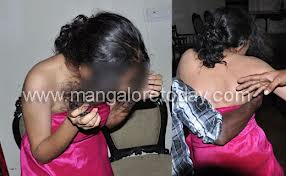
Karnataka police on Monday arrested four more persons in connection with the assault, bringing the total number of persons arrested to 12. “We have arrested four more persons on the basis of information given by the eight activists who were taken into custody on Sunday for their alleged involvement in the incident. Investigation into the case is progressing in the right direction,” Mangalore police commissioner Seemanth Kumar informed. The arrests of the pro-Hindu Jagarana Vedike (HJV) were made under various sections of the Indian Penal Code (IPC) and the Karnataka Prevention of Destruction of Property Act. They were also booked on charges of assault, outraging the modesty of girls, criminal intimidation and intrusion.

“We have booked cases against all the accused for the offences they had committed. We are on the lookout for another 10 activists of the outfit who were also involved in the incident,” Kumar said. The victims, including eight boys and five girls, all students of three local colleges in the coastal city were asked to file statements giving their version of the events.  Police intends to produce all the 12 accused in a local court for remand and custodial interrogation after completing the preliminary investigation based on evidence collected at the home stay, victims and eye witnesses.

The police however have also booked cases against the media house which exposed the Saturday’s incident. Speaking to Tehelka, Naveen Soorinje, a journalist with the private channel said, he was not abetting the acts of the vedike members but was recording the incident as part of evidence gathering. In fact, he insists due to our footage, the police were able to arrest 12 of the victims, who otherwise had run away in the thick of darkness by the time police had arrived. Contrary to the police claims, he says he made several calls the local inspector Raveesh Naik, who didn’t receive his call. ` You can check my call records to confirm it’ he says.

In a related development, high schools and colleges in the port city were shut as students stayed away from classes protesting against the attack on the students. Meanwhile, opposition Congress leader Siddaramaiah condemned the attack during a discussion on the incident in the state legislative assembly and sought stringent action against the accused. “Ever since the Bharatiya Janata Party (BJP) came to power in 2008, the state has been witnessing a series of attacks by the Sangh Parivar activists on women, especially college-going girls in the guise of moral policing. This amounts to Talibanisation of our peaceful society,” Siddaramaiah said

----- -------------------------
Here is a detailed account by Naveen Soorinje, the reporter from Kasturi channel, of the July 28th incident in Mangalore in which girls and boys at a birthday party were attacked and abused by members of Hindu Jagarana Vedike.

It is very important to hear his version of the story considering that he is being made out to be the villain of the piece by the police. Cases have been booked against him under Unlawful Activities Prevention Act and several sections of IPC. While ethical debates on the manner in which such an event should be portrayed by the visual media are not to be undermined, there is no denying that in this particular case there is a clear attempt to fix the reporter.
---------------------------------
At 6.45 in the evening on July 28, one of my news sources from Padil (in Mangalore) called me. This was all he told me: "Naveen, around 30 men have gathered near the Timber Yard in Padil Junction and I overheard them talking to someone trying to coax them to gather some more people. They were instructing someone to be prepared with their motorbikes. It looks like they are planning to attack the guest house in Padil. I overheard them saying something like Muslim boys and Hindu girls.”

I asked him to find out which organization the men belonged to. All he could gather was that they were from some Hindutva organization, though he could not find out the name of the exact organization they belonged to.

The immediate thought that crossed my mind was this: “Should I inform the police right away or should I not?” The dilemma was because there was no accurate information as to who belonging to which organization was to attack whom and where. I just had very rudimentary information on hand. If the members of the organization had called me themselves, I could have indeed informed the police instantly. As the news came from a my source, I thought I should inform the police only after confirming the news. Having come to this decision, I set out on my bike to Padil along with my cameraman.

In a while, my cameraman and I were outside the guest house/ home stay named Morning Mist located on the hill in Padil. None of the attackers who eventually turned up were present at the spot then.We stood there for five minutes unable to understand why anyone would plan to attack that particular home stay which is located half a kilometer away from the highway cutting through Padil. The home stay is surrounded by a tall compound wall on all four sides. There is only one gate and 60 meters from the gate is the home stay. I stood near the gate and watched. There was nothing happening inside that could conceivably provoke an attack. A girl was sitting outside on a chair and two boys in another corner of the bungalow were absorbed in their mobile games. They were not indulging in any activity which can be considered illegal. That is the reason why I did not inform the police at that point of time. If my information turned out to be wrong, it would be an unnecessary anxiety for the entire police department.

While I was making all these calculations in my mind, I saw a group of over 30 people marching towards the home stay. Out of curiosity I asked them in Tulu: “Do you know what the matter is? What is happening here?” Some boys in the group pointed to the girl sitting outside saying: “Look, there is the girl and there are the guys…” They ran towards them, all set for attack. The girl, who realized that the group was there to attack, ran inside the bungalow and tried to close the door unsuccessfully. The group of 30 managed to run to the door and open it before the girl could close it completely.

Only at that point was I completely aware of what was happening and my conscience was also awakened. I immediately called Ravish Nayak, Inspector, Mangalore (Rural)(+91-948085330) from my official number (+91-9972570044). That must have been around 7.15 p.m. Ravish Nayaka did not receive my call. On the other hand, the assault had just begun. The girls started running helterskelter failing to understand what was happening. The police personnel were not receiving the calls being made. I asked my friend Rajesh Rao of TV-9 to call the police and Ravish Nayak did not receive the call made by Rajesh Rao either.

While I was trying to get in touch with the police inspector, the cameraman ran behind the attackers and got started on his duty of recording the action. Till then only my cameraman and I were present at the spot but were soon joined by the cameraman of Sahaya TV, Sharan, and a photographer, Vinay Krishna. I was a mute witness to all that was happening there, with the guilt of not being able to do anything. More than half the attackers had consumed alcohol and were not in a position to listen to anything. I have been witness to violent incidents in my life, but never before violence of this scale and nature. Our cameraman was running wherever the group was attacking individuals. I was watching it and screaming and requesting, “Don’t hit the girls.” My request reached the camera sound recorder but did not reach the attackers.The boys who were attacked were pleading, “Please leave us. We are having a birthday party here. Please…” and were falling at the feet of the attackers. But nothing moved the attackers. If it were to be just this, probably I could have forgotten the incident. But I saw something much more terrible and shocking. 

The girls who saw the boys being trashed were shocked at the sight and ran in all directions only to be followed by the attackers. Believe it or not, one of the girls jumped down from the first floor but was caught by nearly 20 attackers who began to pull out her clothes. They slapped her and pushed her to the wall. By then the girl in pink clothes managed to run away. When the attackers caught her, she was literally stripped naked. Leaving her with only one piece of cloth the assailants molested her. This sight sent a chill down my spine. Never in my life had I seen something as horrific as this, though I had heard of such things. These were the scenes which could not become visuals for the news. Only a portion of the incident was shot. Later on, all the boys and girls partying there were locked inside a room. All this happened in a matter of 15 minutes.

When the attackers were done with one round of their planned action, Inspector Ravish along with Police S.I. Manikantha Neelaswamy and others arrived at the spot. It appeared as though the police had a tie-up with the attackers. For over half an hour the police were in conversation with the attackers. I was utterly shocked by the scene of police conversing with the them. While they were conversing, one boy who was in the partying group tried to escape, but was caught by the police. When in the custody of the police, the attackers trashed him.

By then many media persons had arrived at the spot. My cameraman and I returned to the office and uplinked all the visuals to the Bangalore office. At 8:45 p.m. the news was aired. Within no time the visuals of our channel was used by national channels and thus the incident became national news. This angered city police Commissioner Seemanth Kumar who called my friend Rajesh Rao of TV-9 who then was with me. Rajesh put the call on loud speaker while Seemanth Kumar was saying: “Why should Naveen have reported the incident? I will teach him a lesson. He not only compared this incident to the Assam incident, but also said that Mangalore is being Talibanized. This time he will be taught a lesson. We will fix him in this case and none of his contacts at any level will be of any help.” It is crystal clear from the words of Seemanth Kumar that his concern was not the attack itself, but the fact of the attack being reported.

This morning I received yet another shock. The attacked boys and girls had given statements against me at the Mangalore Rural Police Station. I was sure that those statements were given under pressure. I guess the boys and girls had heard me requesting the assailants not to trash them. By evening my doubt was cleared. Speaking to the media the attacked boys and girls said: “We haven’t complained against the media. They have stood in our support.”

Mangalore (Rural) police have filed a case against me under the Indian Penal Code and Unlawful Activities Prevention Act. The police have arrested eight of the assailants with the help of our visuals. The incident we have reported is shameful, not the visuals we have shown. The 28 July incident at Mangalore is neither a stray incident nor are such attacks in Mangalore a new phenomenon. Every week such incidents take place. Fundamentalists not only attack boys and girls mixing with the boys and girls of another religions but also take them to the police station. This incident would have taken place even if I had not shot it. Our recording has revealed the inhuman face of the fascists and has led to the arrest of eight attackers. No matter what is said and what cases are booked against me, I believe I have done my duty as a reporter and that is the only satisfaction to my hurt self.

It doesn’t matter to me that there are complaints filed against me and an FIR has been lodged. I will be happy if the attackers are punished because of the FIR lodged against me. If I am to be freed of these charges because of some pressure and if that is going to benefit the the attackers in any way, then I do not need such freedom. No matter what punishment is given to the attackers, it will never do justice to those girls who were assaulted right in front of my eyes. Yet they need to be punished.

There is more to write, but time does not permit. If any individual or association needs more information to fight the cause or if any investigation team needs more information, I can be contacted at any time of the day.

My address:
Naveen Soorinje
Reporter
Kasturi News 24
Mangalore
Mobile: +91-9972570044+91-8971987904


Friday, July 27, 2012

Discrimination of RTE Kids in Karnataka - An Analytical View

The recent incident in Karnataka which shocked the state and civil society of cutting of hair of poor students admitted under Right to Education (RTE) to differentiate them with other shows a deeper tension within the society.
Parents and Dalit groups protest Outside School - Pic by Imran Khan
The story of these students is not stories from margin and hence must not be read in obscurity. The private schools are opposing the idea of RTE and its implementation since long. KUSMA (Karnataka Unaided Schools Management Association) an organization of private schools has been fiercely opposing the idea since its inception and has gone long in criticizing it. The president of KUSMA GS Sharma had to quit on July 18 following a row after he had stated that students getting into private schools under RTE were like sewage flowing into clean water body and polluting it.

In case of Oxford Public School an up market school and member of KUSMA, it has been alleged that the management of the school in order to differentiate students coming from economically backward and poor sections under RTE cut tufts of their hair. According to the parents of the children whose hair was cut, the school has been systematically discriminating them from the beginning and even to get the RTE form they had to resort to protest only then the management relented. In a class of 40 students of 1st standard at Oxford, eight children have been admitted under RTE.  `` they were made to sit at the last bench, their names were not included in the attendance registrar, no books was provided to them, they did not give them any homework and over it the teachers there used to check the tiffin boxes of our children – taunting them whether you have brought yesterday’s left over food since you are poor’’ says Geeta one of the Victim’s mother. 

The above incidents not only shocked the people of the state, but also sent seismic waves across the nation. What perturbed many was of the fact that such a thing could occur in Bangalore, one of the modern cities in India known for its cosmopolitan culture and IT hub and presumed to be a liberal and open place.  What shocked even more was a deeper tension exhibited in subject matter like education which was meant to bridge gaps within classes and communities.  Even though it has been more than 60 years since independence, the recent events have shown that the gap has not been bridged, rather in a neo liberal set up where governments are getting rid of ‘ welfare schemes’ and handing them over to private players, education as new found ‘commodity’ has certainly become a major bone of contention. Even in fields like water and mid day meals too, the Karnataka government has been more than enthusiastic in handing over to private players.  While n certain districts the state government has handed over the supply of drinking water to Tata and sons ( it wants to emulate the model to the entire state), the supply of nutrients in mid day meals is slowly being handed over to the mining giant Vedanta. 

The recent RTE row in the state and resistance that followed certainly exposes the design discrimination on the part of the state. The learning is that even if laws like RTE are passed, governments are least bothered to implement it with iron fist. The KUSMA body when refused to implement the scheme, and went on a week long strike, the state government which was well within the RTE law to take action against the body chose to overlook it.


On one hand the government has dilapidated its schools both in terms of infrastructure and teaching; leading to primary education becoming a tough job for the large section of the society. On the other hand, it has privatized the higher education at large. Recently in Karnataka, the BJP ruled government was on a drive in closing down schools that had fewer students; rather than resolving why the turnout is less.  Though, the government had plans to shut down more than 3000 schools, opposition from civil society forced them to bring the number down to 600. 
On the other hand, the schools run by private players who want to profit from the education business (hence RTE is not a good business) the clear indication sent by them is no entry for those who cant afford ‘quality education’. 
As Nayaz Pasha, an auto driver and father of the child Madeen Kausar (6 years) whose daughter’s hair was allegedly snipped by the Oxford management says, I was thrilled when I heard that through RTE even my daughter could afford a quality education. But looking at recent incidents, I am scarred to send my daughter; we may opt for government school now’’.


Karnataka boasts of getting nearly 45,000 students admitted under the RTE quota this year. But almost every second home that saw the RTE at play talks of some subtle discrimination, elitism or harassment. As RTE activist Yasir Mohammed points out, he spent more than two months convincing parents to send their children to private school, whereas convincing schools was next to impossible. Yasir says he approached nearly 18 schools to implement the RTE act, apart from 3-4 schools; the rest gave a cold shoulder. `` They did not entertain us, some even called the police’’ says he. 

RTE Kid whose hair was cut by Oxford Management School to separate Him from other Kids
Karnataka has a deep rooted sense of caste and the politics as such is here strictly caste driven, hence a duet of privatization and caste assertion goes hand in hand in the state. The caste root of the state certainly bring the fruit of discrimination may it be incident of cutting hair to differentiate or forcing lower class people to roll on the left over foods in temple or like in Mangalore, the Hindutva hot bed, where girl students wearing burkha are banned from coming to colleges. 
Take the case of upper limit of income in RTE act in Karnataka. Among Southern States, Karnataka has the highest upper limit for students to be admitted under the RTE quota. With the upper limit income of Rs. 3.5 lakh it beats even Tamil Nadu where it is Rs. 2 Lakh. In kerala only BPL card holders are eligible for RTE quota. This is certainly a critical point and consequently the deserving and deprived class will not get the fruit of this law. This is also argued that the government officials and employees will get the benefit of RTE and upper limit liberty.

The Oxford School management after two days of protest tendered an apology to all. However, the correspondent of the school, Ajith Prabhu clarified that there were hair cut of other students other than RTE children too, and it was done by a student of the first standard in the crafts class; while the teacher was busy drawing on the board. He also said that, there was no discrimination on the part of the school.
National Commission for Protection of Child Rights (NCPCR) however has asked the government to clarify on this issue. Taking cognizance, secretary of Karnataka primary and secondary education G Kumar Naik informed press that, they have initiated an inquiry and sought a report from zonal officers. However, even before the committee could inquire into the incident and bring out its report, minister for primary and secondary education Vishweshwar Hegde Kageri has cast aspersions on the dalit organisation ( Karnataka Dalit Samrajya Samiti) who helped in bringing out this issue. The minister on record has said that, the whole incident was created by the organization which had some problems with the management.


Box:
According to the District Information System for Education (DISE) data for 2011-12, the total number of government lower and higher primary schools (LPS and HPS) in Bangalore North is 511 and Bangalore South 891. The enrolment for Class 1 in government schools in these two divisions stands at 9,728 and 16,707, respectively, as on September 2011.
In contrast, the number of unaided private LPS and HPS schools in Bangalore North is 937 and 1,377 in Bangalore South. Class 1 enrolment in unaided schools in these two divisions, according to DISE figures, stand at 43,045 and 65,774.
If 25 per cent reservation is observed strictly in all unaided schools, the number of those currently going to government schools can be absorbed by the unaided schools over the next few years leaving the question of what will happen to the government schools then.

Abdul Qaudeer- Ghost of a Communal Riot

Abdul Qadeer in his hospital bed. Pic by Imran Khan 
In 1990, a month after Lal Krishna Advani’s Rathyatra sent seismic shocks across India’s secular fabric, polarising it across the fault lines of communal identity, Hyderabad witnessed one of its deadliest riots. When the mindless slaughter and arson which started on December 8, were quelled four days later by the military, it left over 150 people dead.
Abdul Quadeer is one of the ghosts left behind by the riots.


It was in the early hours of December 12 that Constable Abdul Quadeer pulled out his gun against his superior ACP Sataiah and shot him dead at point-blank range. The Andhra Pradesh Government argued in court that Quadeer was a communal fanatic and demanded the death sentence for Quadeer. The judge did not buy the state’s evidence of a communal motive but in his judgement sentencing the 29-year-old ex-policeman to ‘life imprisonment’, chose to remain silent on Quadeer’s motive for shooting Sataiah from behind during patrol duty in the riot-torn Old City in Hyderabad.


Speaking from a bed in Gandhi hospital in Hyderabad, Abdul Qadeer, says paradoxically, that he did it to uphold the law. “What I did, I did it, in the interest of saving innocent lives. The police was firing on innocent Muslims. They were doing the rounds and shooting down people of one community. It was criminal and against the law, what they were doing,” he said. Looking much older than his 49 years, Quadeer, who is undergoing treatment for diabetes and hypertension, does not know that doctors at the Gandhi Hospital has advised amputation of his left leg.


Qadeer who has spent 22 years in prison had to undergo the pain of watching his four children (two sons and two daughters) grow up without their father. He was barely four years into his marriage with Sabira Begum (40) when he was incarcerated . Consigned to a life with nothing to cheer about, she laments the additional burden of raising her four children on her own. “My husband suffers from various ailments diabetes, blood pressure, and mental depression. He has already served his sentence, then what is the point of keeping him now?,” she asks.


In the inflamed communal atmosphere that polarised the state after the Babri Masjid
demolitions, Qadeer says he was severely tortured in jail and that the injuries he received from torture and maltreatment is responsible for his present condition. Even after completing 14 years of his life sentence in 2004, both the government and the courts have refused to remit his sentence. The same year, the AP government blocked his release through a government order (GO). In 2008, the Supreme Court ruled in a different case that it was up to the government to decide whether to release life convicts after 14 years.
However, in AP as well as in other states, life convicts are automatically released on
completing 14 years and it is only in rare cases that the government decides to prolong their sentences. Quadeer alleges that top police brass of the state is interfering with his release to punish him for killing one of their own.


Quadeer alleges that ACP Sattiah was in the pay of politicians who manufactured the
riots for their own gains and enforced and sustained it through the men in khaki. He says the officer used the police force to fire shops in Muslims neighbourhoods and often directly targeted Muslims men, women and children fleeing from Hindu mobs or goons hired by politicians. While the actions of an individual officer in those strife-ridden periods are impossible to establish, activists and political observers say that the police force in the state had definitely become communalised in the aftermath of the riots. Noted Human Rights activist and revolutionary poet Vara Vara Rao points out that, many of the top police officials turned to Hindutva openly after retiring from service. Rao cites the example of Aravind Rao, who post-retirement has started discoursing on Hindutva.


The then Chief minister of Andhra Pradesh Dr. Marri Chenna Reddy of Congress was a champion of the Telangana movement. In 1990 he was sworn in as CM for the second time when the riots took place. Political observers and various news reports of this period declare the riots to be an insider job, particularly of leaders from the Rayalseema region. Marri Chenna Reddy himself went on record in the State Assembly and blamed a group within congress of triggering the riots to dislodge him. His ire was particularly directed at YS Rajashekhar Reddy, then a factional leader within the Congress party.


In 2004 when Rajashekhar Reddy came back to power, several convicts who had
received life sentences were released including several Naxalites, underwold don
Suri ( convicted in the Jubilee hills bomb blasts case) and arms smuggler Mohammed
Mujibuddin who was serving life for killing an IPS officer, says Lateef Mohammed
Khan, General Secretary of Civil Liberties Union. “The Muslim community had
demanded for Qadeer’s release; in fact the community had objected to Mujibuddin’s
release. Muslims are not able to understand why he is not being freed,” adds Lateef,
whose organisation has petitioned the president for Qadeer’s immediate release on
humanitarian grounds. Interestingly Mujibuddin, who is rumoured to have been released at the behest of Jagan Mohan Reddy, is now serving time for crimes committed after he was freed.


Members of the civil society also suspect that Qadeer is a victim of the politics within the various Muslim political parties that command the Muslim vote in the state. As Qadeer is a hero in the community, various political groups within the community are vying to take the credit of his release for their political benefit, says Lateef Khan. Fingers are being pointed towards the largest and most dominant Muslim party of the city All India Majlis-e-Ittehadul Muslimeen (AIMIM or MIM) which has 7 MLA's and Asaduddin Owaisi as MP. Critics point out that, MIM which is the coalition partner in the ruling state Congress government had earlier got several prisoners released on the basis of their support. However this time it is alleged, they have not shown much enthusiasm as different players are also vying for the release


MIM supremo Asaduddin Owaisi however rubbishes all these claims and terms them as propaganda on the part of his opponents. According to Owaisi, the MIM has been unable to secure Quadeer’s release as the police establishment is actively resisting it. He said “I am not the President of India that I enjoy such an authority over the government that I can get Qadeer released in one day. But it is not true that we are not trying, we raised this issue in Assembly, and made a representation to the Chief Minister to release him. But whenever we try to push for his release police leadership comes in between the consultations and reminds the government that he killed a police officer of higher rank. The police lobby is the biggest hurdle in his release.”